


We're living through a moment in which artificial intelligence is reshaping the way we work almost week by week. It doesn't just push us to work differently; the very AI tools we're learning to use go out of style within weeks, replaced by new ones.
The pace at which the industry moves raises an uncomfortable question about our role. If anyone with no technical background can now design and build a digital product or a company website from a single prompt, where does that leave us?
This article sets out to answer a few questions about our role as designers: which qualities of our craft hold up over time? Which of our skills stay valuable, no matter what tool we happen to be using?
The state of artificial intelligence
In 2026, anyone can turn an idea into a product in seconds, with zero technical knowledge. The AI reads the prompt, cross-references it against everything it knows about how to design a product, and a few seconds later, you've got a working platform.
AI-generated interface design already reaches a more than decent level. It respects proximity, it gets hierarchy right, and one or two extra prompts resolve many of the issues that used to come up: contrast, accessibility, type sizes.
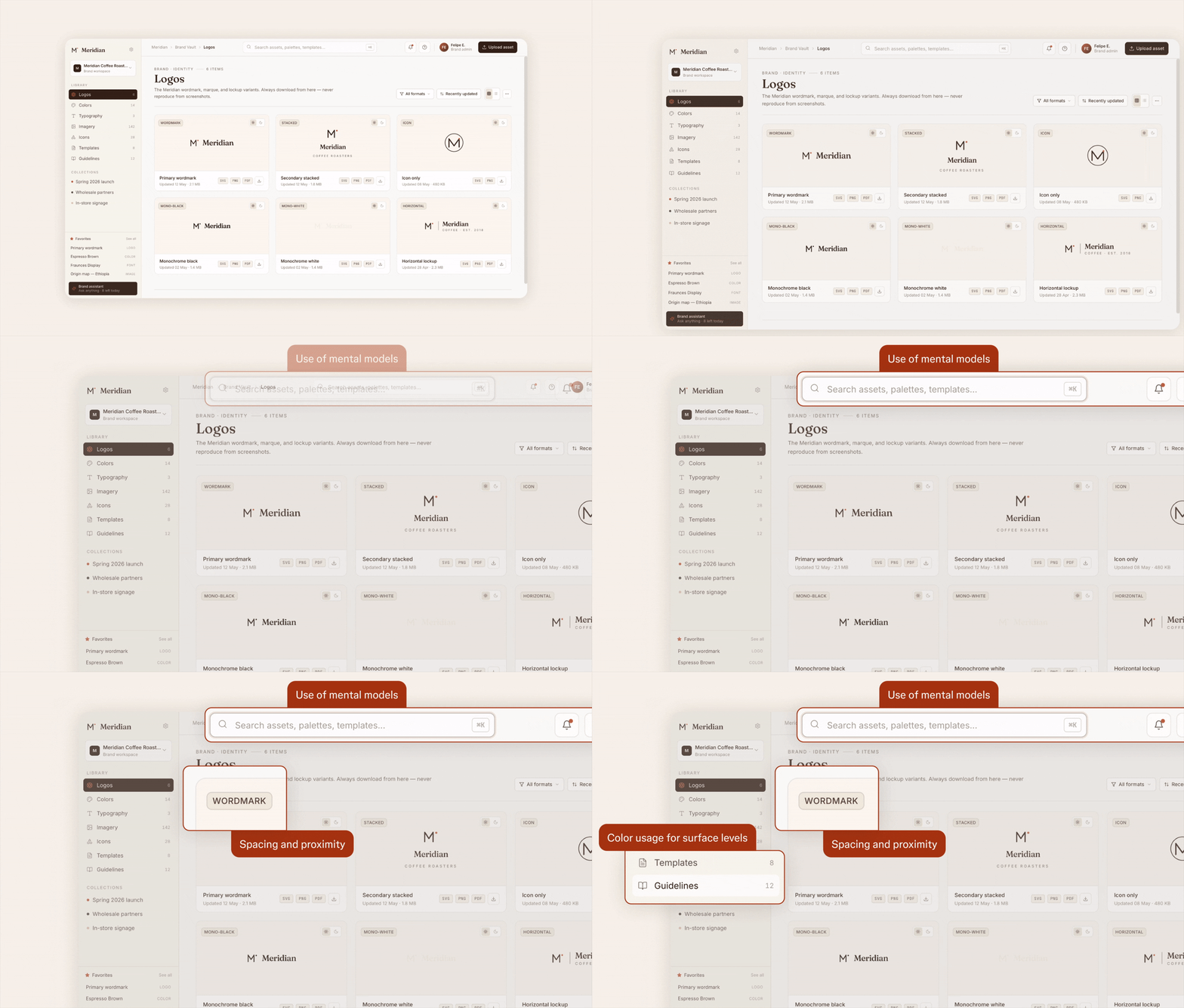
When you think about it, it makes sense. These models feed on everything documented across the internet, every article, tutorial, template and system, like Tailwind or Material Design. Most of those sources focus precisely on the structural side: grids, button sizes, contrast, proximity, spacing. In other words, AI understands how to put together a harmonious composition from clear rules.
On top of those rules sits an endless amount of information about design patterns, best practices, mental models and heuristics. Any UX fundamental you can think of is already in there. That's why, no matter what we ask for, it'll deliver something correct and, broadly speaking, well resolved.
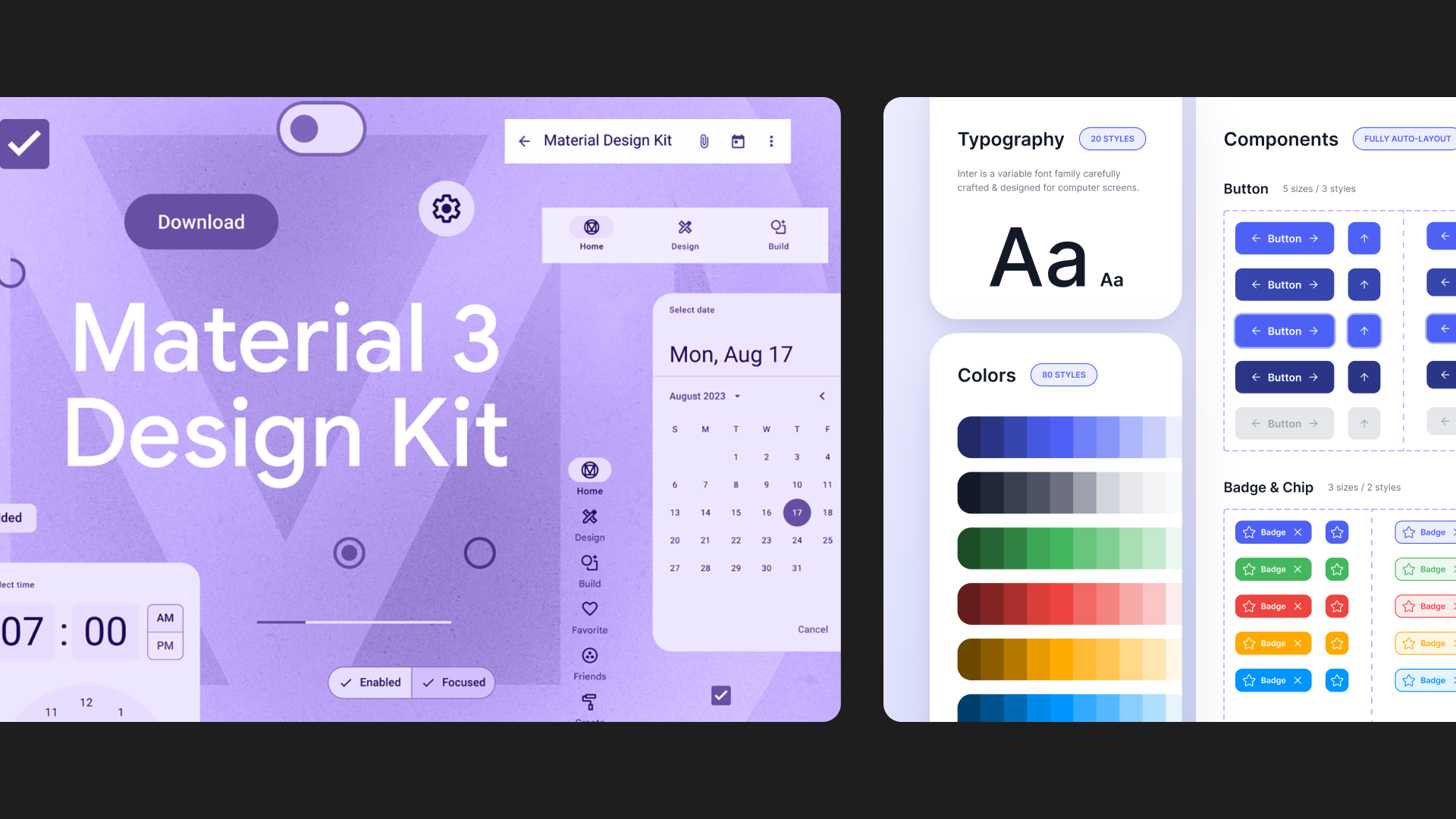
That shared, freely available foundation also explains why so many products, apps and websites are starting to look alike. The resemblance shows up visually, sites that look like they came out of the same mold, but increasingly in the experience too. The models fall back on the same patterns over and over, without adapting the solution to the specifics of the people who'll actually use the product.
And that's exactly where human craft regains its value.
The designer as an articulator of ideas
One thing is clear: the distance between having an idea and making it real has shrunk dramatically. What hasn't changed is that, to reach that final product, you first have to understand the idea and then know how to explain it. Better still: to be the person who can bring it down to something tangible, something that makes sense and adds value.
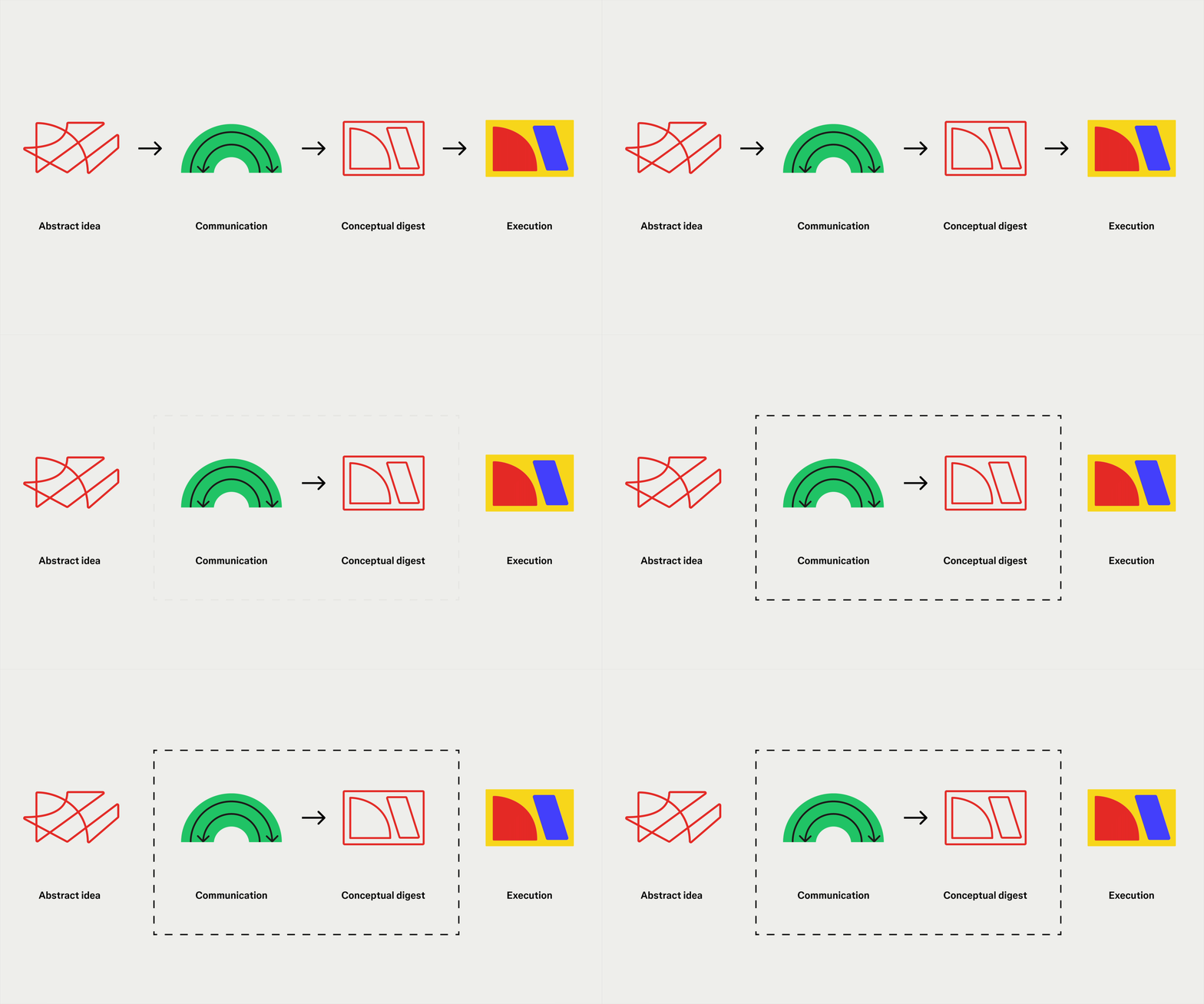
Your job today may consist of executing ideas already articulated by a product owner, a client, or other people on the team. But the role of the product designer takes on a different weight when it gets involved from the definition stage, when it helps translate the abstract into something functional.
The new tools speed up the execution stage: design, prototypes, iteration. But they don't work on their own when it comes to product definition, which is why we'll see more and more products hitting the market, but of lower quality. For the final product to be truly good, the designer's effort moves upstream: toward the ability to conceptualize and articulate ideas that don't yet have a shape.
Understanding the business
A good product is connected to business goals. In the ideation stage, we designers are the ones in the best position to align the user experience with the commercial strategy.
That means asking the questions that matter:
- What problem are we trying to solve?
- Who are the users?
- What's the market opportunity?
- Does it add real value?
- What are the business goals?
- How is it going to make money?
An AI model doesn't ask itself these questions: it executes whatever it's told, without challenging or questioning whether it's relevant to the product's success.
Knowing the user
Knowing the people who will use our product lets us think beyond features and make less generic experience decisions. Does this person work at night or during the day? Are they doing other things in parallel while using the platform? How comfortable are they with technology?
A model can process everything we feed it about users and add whatever is floating around online, but for lack of empathy, it fails to truly understand them.
The designer as a translator of empathy
AI lacks the specific context of our product, our client and our users, but more importantly it lacks empathy. It can't work out on its own that, even though the industry usually solves a given experience with solution A, in this particular case, given the needs, motivations and context of our users, the right call is solution B.

That's our role: guardians of context, and guides for how to use it. We have the vision, the product knowledge and the empathy needed to give identity and value to what we build. More than ever, our work is about the "why" and the "how."
What theory can't quite explain
There are aspects of interface design that are very hard to document. As designers, we can't fully put them into words: they live more in intuition and craft than in any manual.
As we saw earlier, AI models work from the information that is documented (patterns, systems, best practices) and combine it to create compositions that respect the basic guidelines in a harmonious way.
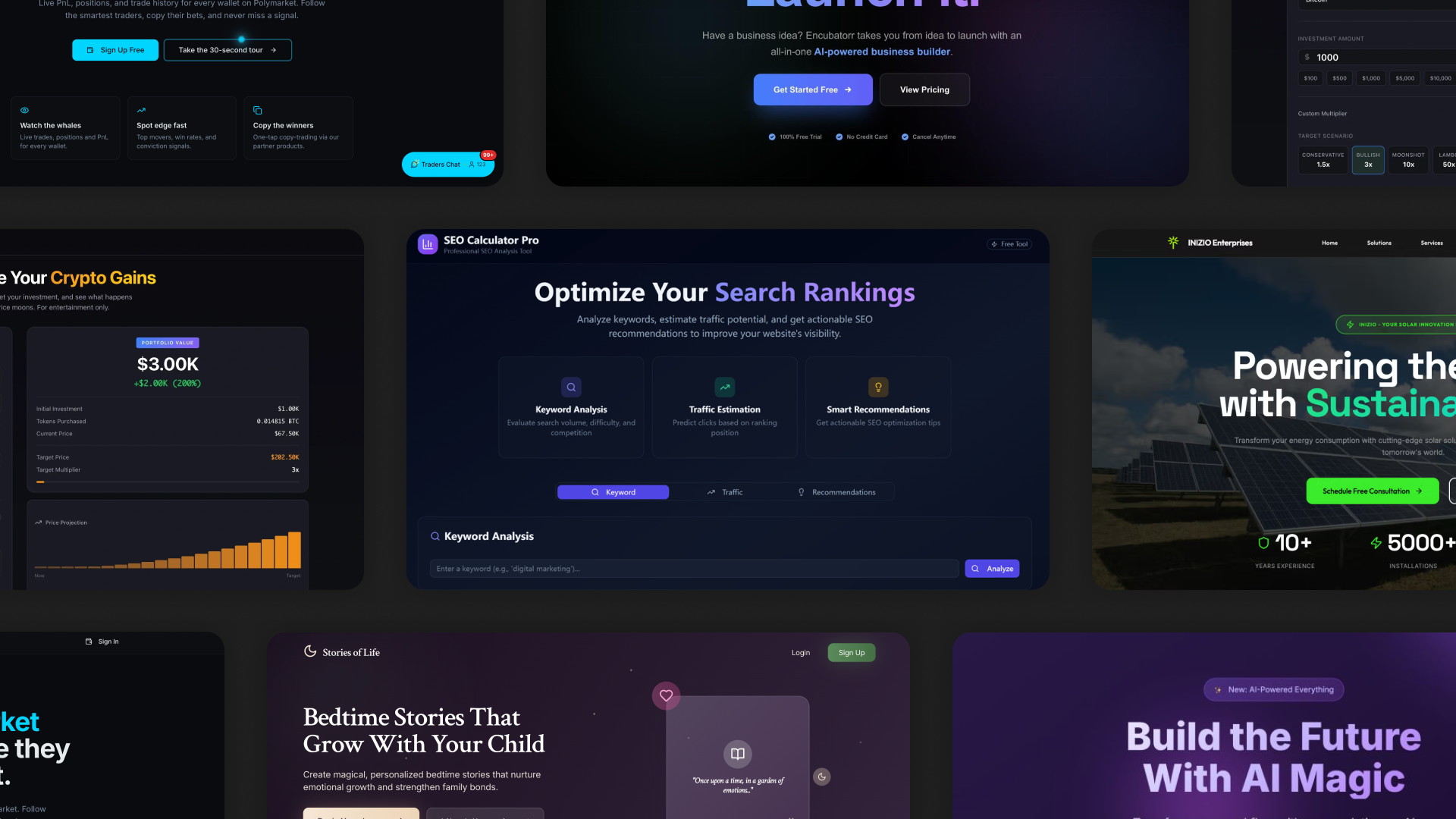
The issue with designing with AI shows up when we don't make a specific request or follow up with further iterations: the result tends to lean on the same resources every time. Similar rounded corners, palettes with the same gradients, Inter across every typographic style. A mountain of products repeating near-identical patterns. What we know as AI slop.
Emotional design as a differentiator
Good taste, impact, creativity, personality, originality. Everything about the creative process that's hard to systematize is, precisely, what AI lacks most. And that's where the interface designer takes center stage again.
Ten years ago, mastering the theory and applying it well was enough to stand out: the rest of the designers were still wrestling with text sizes, spacing and balance, trying to adapt to the digital format. Today those same best practices have become the bare minimum expected, and sticking to that alone makes us indistinguishable. Our designs start to look generated too.
What isn't in your favorite AI's Design.md
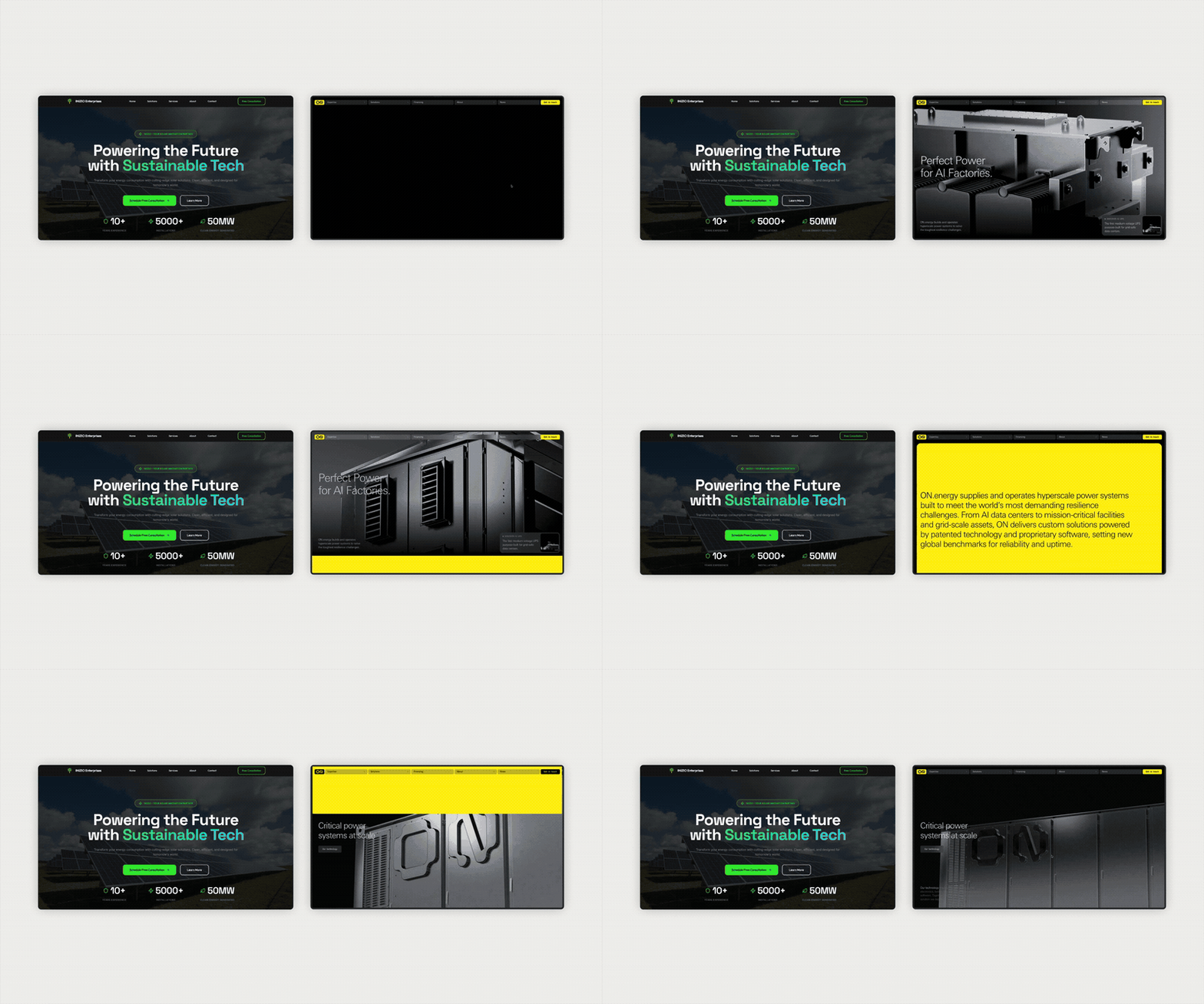
Even though they're hard to systematize, it's worth running through a few resources that, brought consciously into the process, help achieve more original results and set our designs apart from what already exists and keeps repeating across the internet:
Breaking rules and conventions
Daring to break conventions when what we stand to gain is worth more than keeping them. Stepping off the grid, leaving an element out of place. Structure gives us order, and that order speeds up the work, but it also limits us: it stops us from looking at what lies beyond and trying things that escape the typical.
Choosing to swap the traditional playback bar for a control driven solely by the movement of the vinyl may not be the most comfortable thing for the user, but it's an intentional risk that gives the app life and personality.
Moving away from familiar patterns
Thinking through functional challenges beyond what's already been invented. Moving away from familiar patterns means taking a risk, especially when we change an experience the user already expected to solve a different way. But that risk is also what creates impact and can set a product apart from the rest.
Interfaces with personality and intention
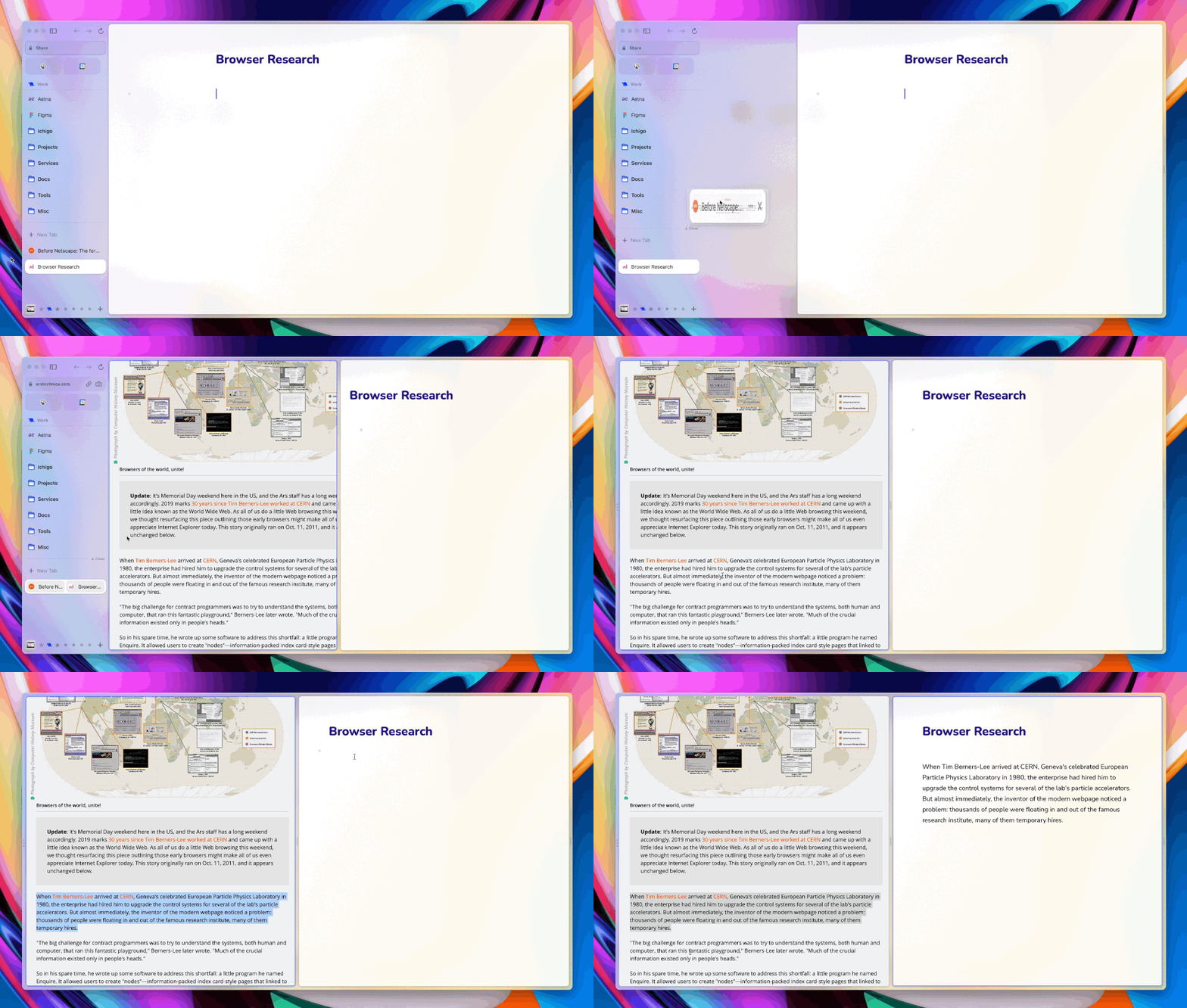
We often confuse designing with intention with applying an identity. But a product's personality isn't built with color and typography alone: it asks that the product's essence run through every visual decision, every component, every interaction. Instead of taking a manual and applying it to the interface, we have to build an experience that feels personal thanks to each new decision we choose to add to the mix.
Fun, interactive concepts
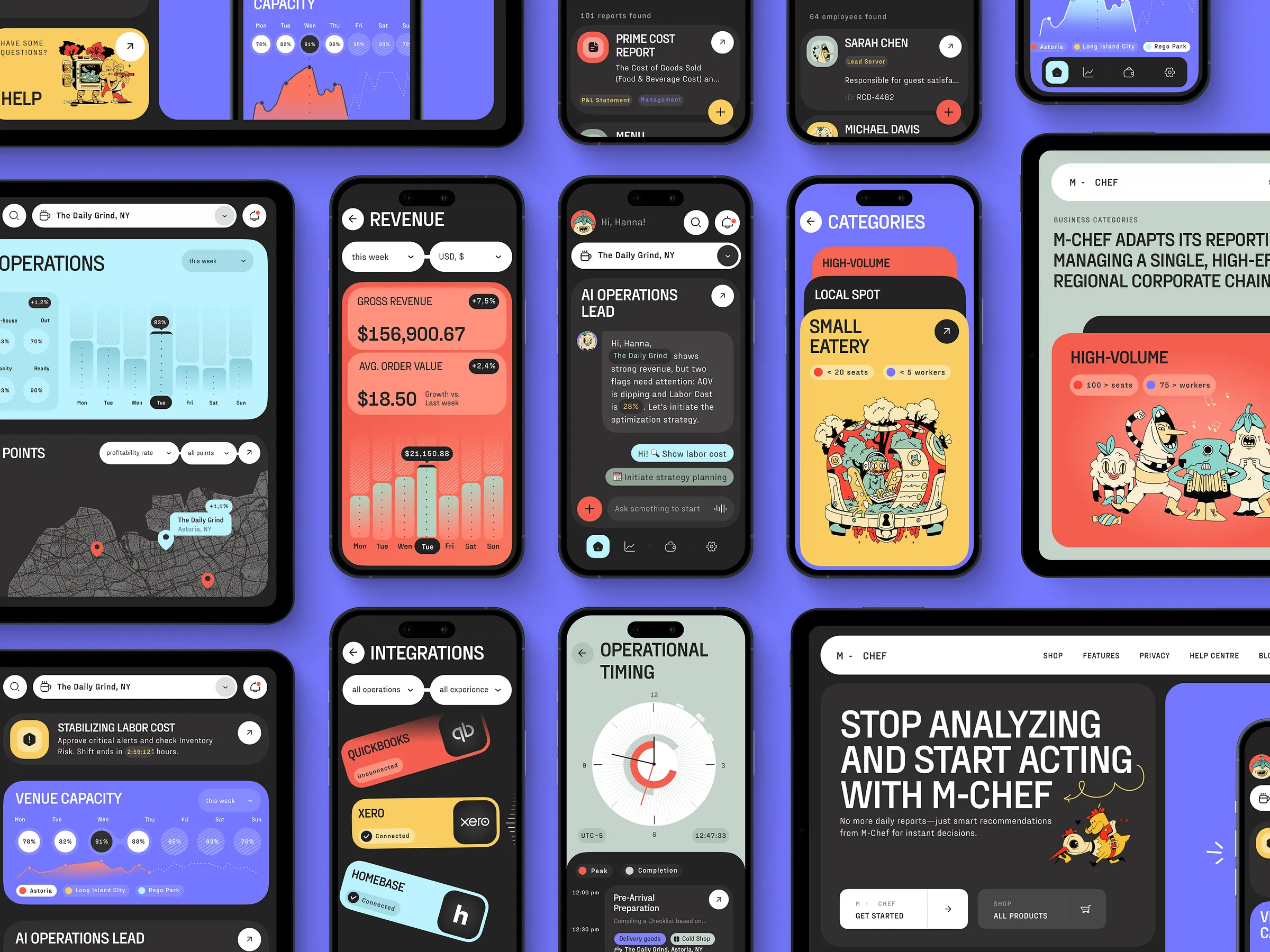
Not every project allows for it, but when there's room, one of the clearest ways to dodge the slop is to create experiences and concepts that are fun and that spark emotion
!boring is a software company whose goal is to create fun products to replace the boring apps we use every day.
Looking for the unexpected
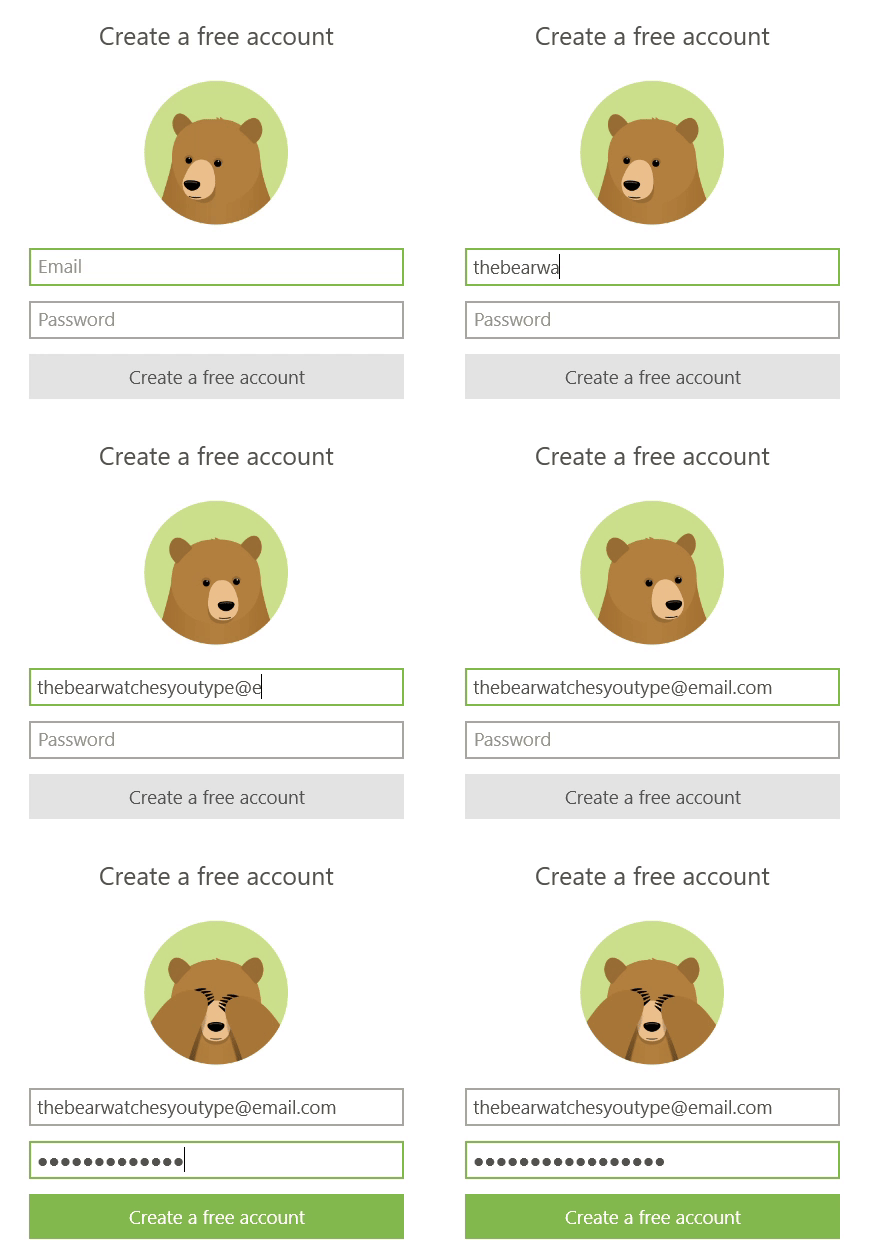
Adding details that surprise, even within predictable flows. Small gestures that delight the user and build a stronger bond with the product.
Conclusions:
In product:
- Think beyond the screen. How a payment screen looks isn't enough: what happens to that payment afterward? How does the customer see it? Where are transactions recorded? What happens if a payment is declined?
- Know the business. Ask the questions AI doesn't ask itself, the ones that help us build our product with business goals in mind.
- Empathize with the user. Use the speed AI gives us to test more, talk to our users, and understand them better.
In visual design:
- Sharpen our basic visual skills. Hierarchy, balance, proximity, interaction patterns. It's the bare minimum, but it's still ours.
- Connect emotionally with the user. Look for creative, customized, distinctive resources. Designs that surprise and invite interaction.
- Challenge what already exists. Avoid monotony by making a conscious effort to set our products apart from what's already out there.